


mindfulness for systems leadership
systems leadership happens inside the real conditions of the world. those conditions include inequity and harm, systems that snap back when pushed, reinforcing loops, the weight of dominant paradigms, and a surrounding culture built on distraction. to stay in this work over time, and to meet it clearly, we need practice that returns us to the present moment, settles the body and steadies the heart.
in our theory of change, mindfulness sits alongside systems practice as a personal precondition for systems leadership. it works in two ways. it sustains the practitioner, building the steadiness to remain in relationship with difficult work. it also sharpens how we see: as we become familiar with the patterns of our own minds, we meet the system, and ourselves within it, with greater precision. the mindfulness we draw on is secular and grounded in buddhist philosophy.
present-moment awareness. we hold mindfulness meditation as the practice of cultivating non-judgemental, present-moment awareness of the body, feelings and mind. we still bring discernment to what we notice. what we set down is judgement of ourselves as we practice.

a witnessing perspective. a feeling arrives, it hooks us, and it becomes a story, and the story can quickly become epic. mindfulness invites us to step back and observe thoughts and feelings as they move through us, so we are less swept away by reactivity.
the grounding practices
the practice of returning. the mind wanders. the practice lives in noticing that it has, and coming back, and each return is a fresh start. there is nothing to win and no one to compete with, including an idealised version of ourselves. most of us have busy minds, and that is part of our shared human experience.
a good friend. in pali, the word for mindfulness, sati, carries qualities of softness and care. we hold mindfulness as a good friend: there from the moment we wake, never upset when we forget her, and right there again as soon as we remember.
courageous heart and mind practices
these four practices come from the buddhist teachings known as the brahma viharas, or divine abodes. they train the heart and mind, and each can be extended from the individual to our contexts and systems.
goodwill. unconditional friendliness, offered as widely as we can.
in systems work this mean building towards environments that are welcoming, responsive, honest and kind.
empathetic joy. meeting happiness with goodwill, and wanting it to grow.
in systems work this means celebrating every win, however small.
compassion. meeting hurt with goodwill, and wanting it to end.
in systems work this means creating and holding spaces where people can tell their stories in the ways they want to tell them.
equanimity. staying balanced with whatever comes
in systems work this means steadying the waves of the internal mind so we can respond to the waves of the external world.

mindfulness across the six practice focus areas
mindfulness as a practice also supports systems practice directly. the capacities mindfulness builds, attention, steadiness, and kindness toward ourselves and others, show up in each focus area of the systems practice framework. in this way, practicing mindfulness strengthens the practice as a whole.
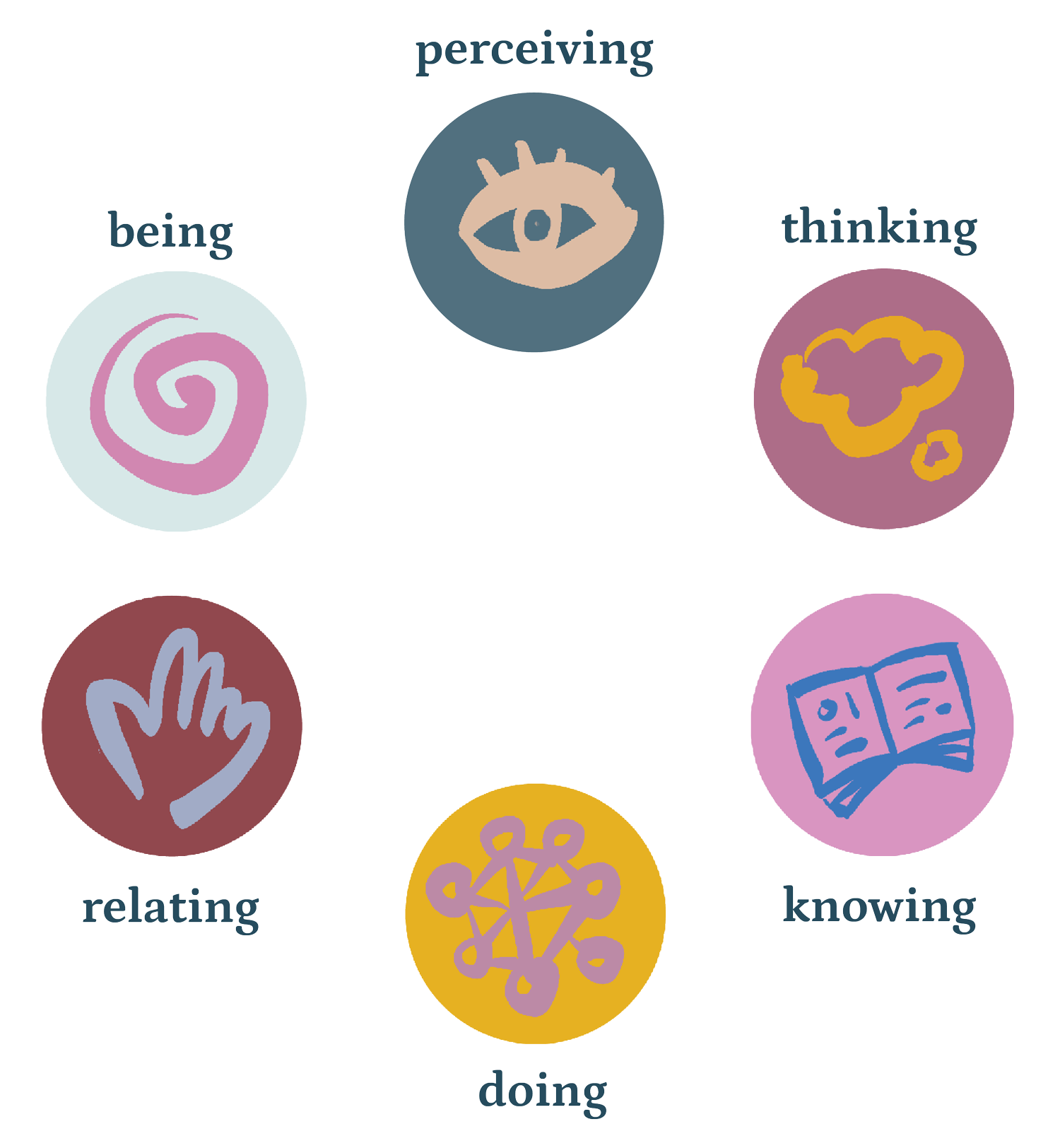
being: the inner work of non-attachment, goodwill and compassion for self.
relating: goodwill and compassion extended to others in the system.
perceiving: a way of reframing how we engage with our emotional responses to systems issues.
thinking: the discipline of equanimity and working towards the evenness of mind.
knowing: meeting complexity without grasping for certainty.
doing: the moment to moment intention we bring to ordinary acts.