

you’re exploring systems practice

how to practice
systems leadership
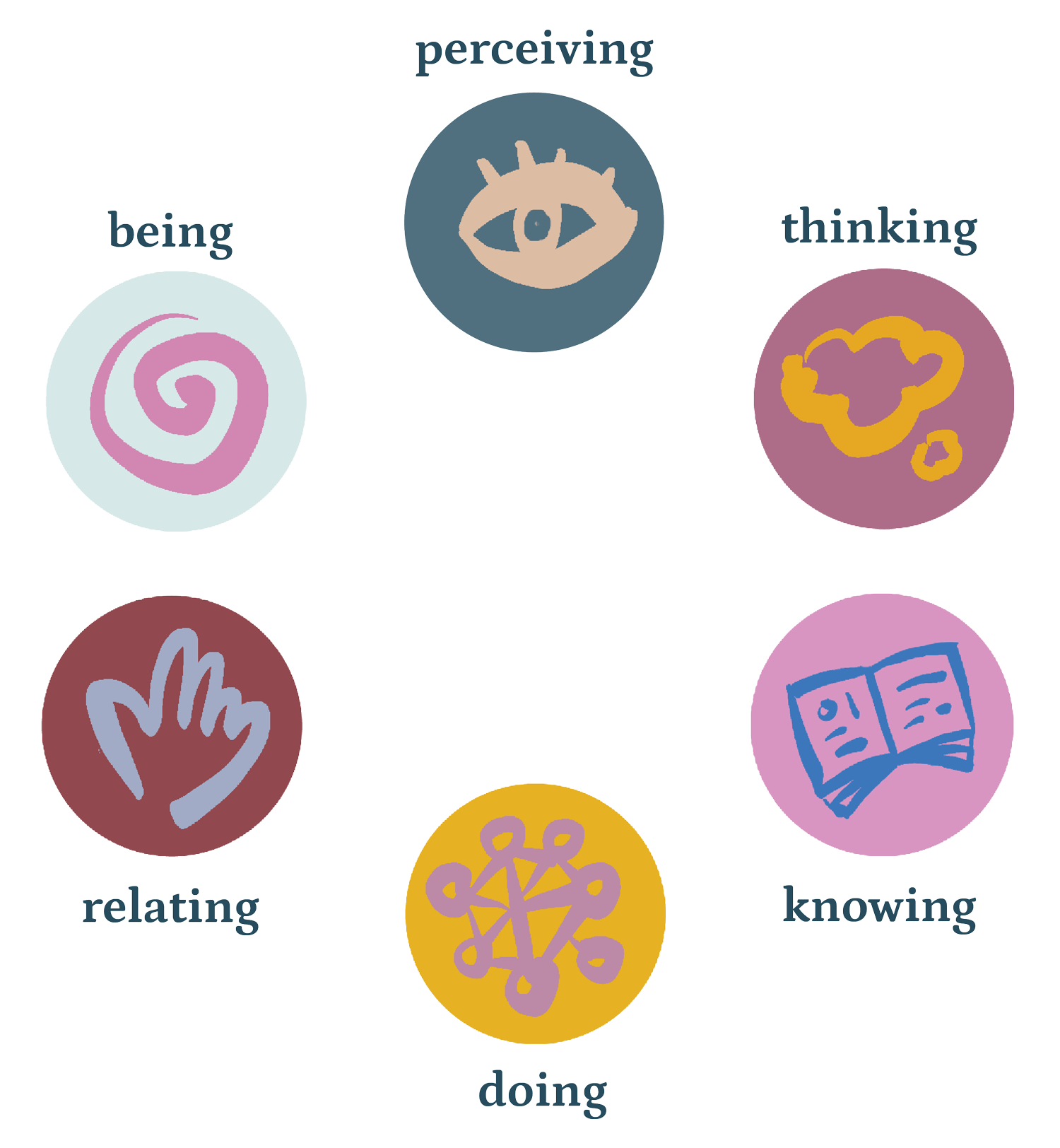
A framework of six interconnected ways to practice systems work
These focus areas are interconnected, and working on practice points within one focus area, will contribute and enhance other practice points and focal areas.
in this way, practicing in systems thinking, is much like systems itself, in that aspects are related and effects ripple throughout.

being
the inner work of a practitioner
this is about recognizing how we influence the systems we’re part of, interrogating and expanding our understanding of ourselves as one of many beings in our shared system. it’s the continuous work of self-reflection and developing the inner capacity needed for this work. being asks us to examine who we are becoming as we engage in systems work.
hold competing perspectives and different ways of knowing
accept paradox and contradiction
sit comfortably with ambiguity
interrogate mental models and biases
consider agency and role in the system
seeing your own subjectivity
understanding your location in the system relative to others
be open and curious
share power

perceiving
frames through which to see the system
this first involves recognizing the limitations, inherent bias and subjectivity of our understanding in any system. hence the name of perceiving over seeing. we perceive a system through two simultaneous frames. the first is always our own values, beliefs, biases and worldview. the second is the focused perception that any tool or method can provide. perceiving helps us understand what lenses we're using to make sense of what's happening around us.
relationships between parts of the system
enabling, disabling and counter factors
systems structure and processes
power dynamics
time delays
system Boundaries
systems purpose
feedback loops and System archetypes
across multiple levels and scales
emergent system properties

doing
enduring actions
the foundational practices that we can apply consistently across all situations - the things that become second nature in how we move through the world. doing is about building habits and rhythms that embody systems thinking.
system sensing
reflect, learn and adapting
unlearning dominant paradigms, narratives and mental models
considering unintended consequences
questioning assumptions
develop and track a theory of change
applying multiple systems thinking methods and tools
move across time and scale

relating
how we are with others in the system
recognizing the inherent mutuality of existing in a system, these practices call attention to being in relationship. relating reminds us that systems work is fundamentally about how we connect, collaborate, and care for one another.
of the six categories, relating most directly enacts the worldview. alongside of the inner work of being, we must also turn to ask, how we are in relationship? not only with other humans, but with all beings and aspects of the system. relating is where the worldview's concept of mutuality becomes lived practice. it calls attention to relationship as the medium through which we operate, and asks us to consider how we connect, collaborate, and care across the full scope of the system.
listening deeply
navigating power dynamics
helping the system to see itself
translating and bridging
fosters reflective & generative conversations
learning with diverse perspectives
seeking the highest collective good for the system
commitment to the health of the whole
decentering humans
creating cultural safety + cultural humility
engaging in difficult conversations
valuing unique contributions + expertise
working towards relational repair
recognizing wisdom in all beings

thinking
cognitive approaches to comprehend the system
the processes and ways of perceiving and learning that most strongly influence how we come to understand a system and its properties. thinking encompasses the mental models and patterns of reasoning we bring to complexity.
visual modelling
patterns and trends
sensemaking
social learning

while perceiving acknowledges multiple truths, knowing names what we take as our greatest knowns, the principles and tenets that guide our understanding of what systems are and how they work. knowing draws from existing bodies of knowledge: complex adaptive systems, systems thinking, and First Nations ways of knowing. this grounds what we hold as most true about the nature of systems and how change is possible.
wisdom about the processes of complexity
structure drives behaviour
the system is working perfectly as designed
patterns repeat across scale (fractals)
there are multiple, subjective definitions of the same system
we cannot fully see or know the whole system, assume unknowns
systems are not solved, but evolved
all parts of a system exist in mutuality
wisdom about operating in complexity
we must experiment with imperfect responses to move towards better outcomes
we must work with practice based evidence not evidence based practice
we can only see the richness of the system through a social learning process with diverse perspectives
we can only change the system from where we stand
all beings are a part of the system, not separate or outside of it